

Some cargo is too big or too heavy for a standard container. Here is what out of gauge and heavy lift cargo means, and why the planning timeline runs longer.

Out of Gauge and Heavy Lift Cargo: How Shipping Changes
Some cargo is too big or too heavy for a standard container. Here is what out of gauge and heavy lift cargo means, and why the planning timeline runs longer.
How U.S. Tariff Changes Are Affecting Global Freight
A standard dry container is built to a fixed length, width and height, and most cargo fits inside without anyone thinking about it. Some cargo does not. It may be too big to fit through the door, or too heavy for standard handling equipment to lift safely. Both problems have to be solved before the shipment is booked, not after it arrives at the terminal and will not fit.
What Out of Gauge Means
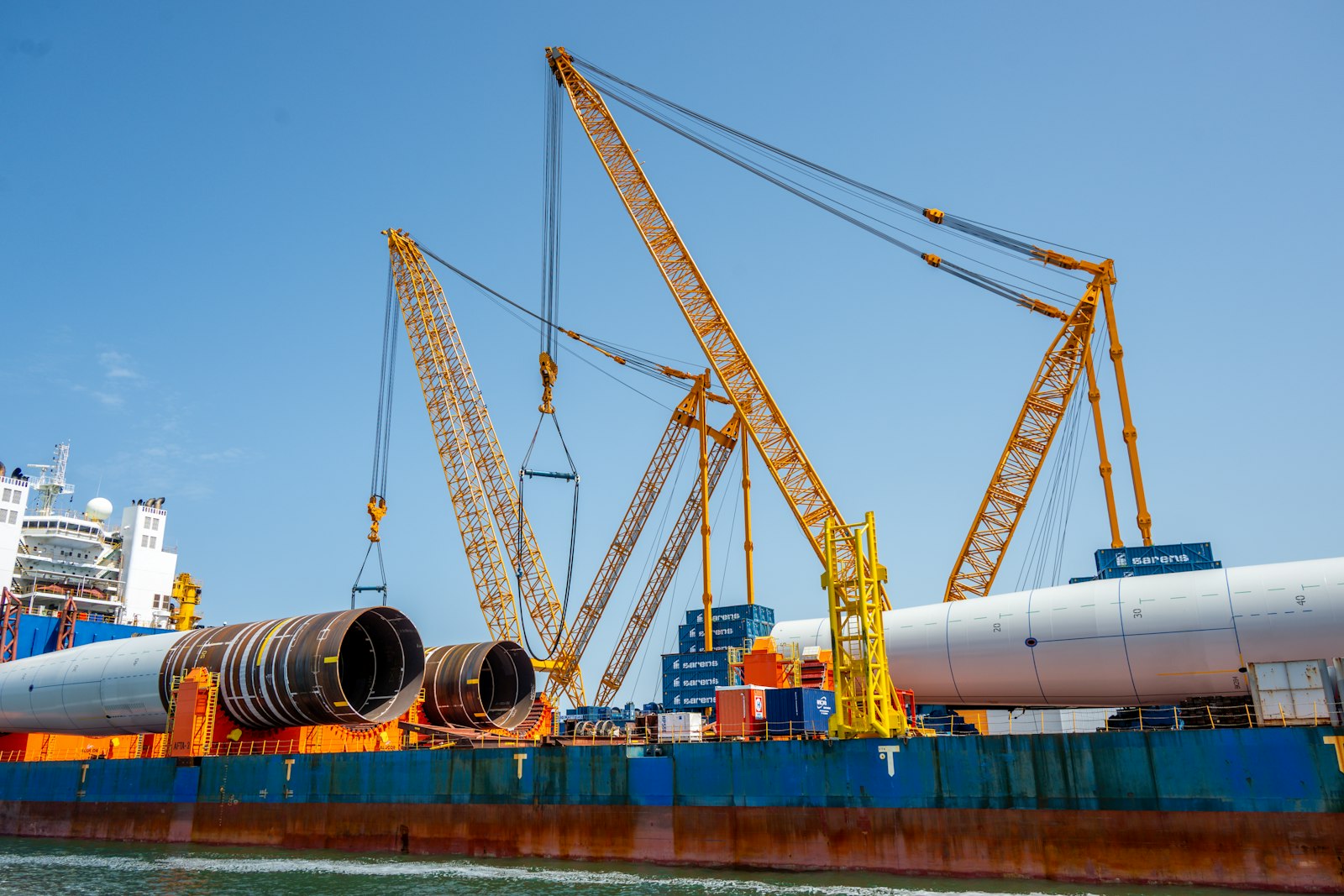
Out of gauge, often shortened to OOG, describes cargo that exceeds the internal dimensions of a standard container in length, width, height or all three. It does not travel inside a closed box. It goes on a flat rack, essentially a container floor with no walls or roof, or as break bulk, loaded and secured directly onto the vessel outside any container. Either way it needs its own stowage plan on the ship, because it cannot be stacked the way a standard box can.
Out of gauge cargo also costs the carrier space. A load that overhangs the sides or the top of a flat rack blocks the slots beside it or above it, and the carrier charges for the slots it can no longer sell. The exact overhang matters to the quote as much as the weight does.
What Heavy Lift Adds on Top
Heavy lift is a separate problem that sometimes comes with OOG and sometimes does not. It is about weight rather than dimensions: cargo beyond what a terminal's standard handling equipment can safely pick up. That means specialized cranes, different lifting points on the cargo itself, and often a multi axle road move with its own permits once it is on land. Flagship's own project work includes a 100,000 lb generator shipped internationally and delivered across multiple states with specialized handling and permits. On a shipment like that, the lift plan and the road permits both have to be sorted before the vessel is booked.
Why the Planning Timeline Runs Longer
A vessel only carries so many flat racks. Book late and you are usually waiting for the next sailing, whatever you were prepared to pay. A rolling mill equipment shipment Flagship handled through the Port of New Jersey moved by flat rack, was transloaded at port, then delivered cross country to a US manufacturing facility. That is three specialized steps, and each needed its own lead time booked in sequence. Time critical OOG cargo runs into the same problem by air instead of sea: a 14,000kg conveyor system moved from Latvia to LAX as time critical air cargo, valued at $2 million. The customs clearance and the heavy haul delivery on the ground had to be lined up before the aircraft landed.
Booking the shipment is only half of it. The receiving site has to be able to take delivery of what arrives. That means a crane rated for the item's weight, laydown space to set it down, and often a rigging crew booked in advance to lift it off the trailer. A shipment that clears the port perfectly and then sits on a truck because the destination site cannot unload it is a planning failure at the other end of the same job. Confirm the site can handle it before the vessel sails.
The Documentation Gets More Involved Too
Exact dimensions and weight have to be declared accurately, because they drive the stowage plan and the lifting equipment booked at both ends. Getting either wrong after booking means a re-plan. Oversized road moves usually need their own permits from the states or provinces they pass through, sometimes with escort vehicles for the widest loads. Those permits take their own lead time, separate from the ocean or air booking. Carriers typically price OOG and heavy lift differently from standard cargo, which shows in how freight rates are calculated. Given the value that tends to travel this way, make sure cargo insurance is part of the plan.
A forwarder needs more than a commodity description to quote a move like this. Expect to be asked for the length, width and height of each piece, the weight, the lifting points and the center of gravity, along with a drawing or photographs. If the cargo can be partly dismantled to bring it inside standard dimensions, say so early, because that can change the whole plan.
Getting the Plan Right Before It Ships
There is very little room to fix an out of gauge or heavy lift shipment once it is loaded wrong. The lift plan, the flat rack booking, the road permits and the receiving site's own capacity to handle the cargo all have to be right at the same time. That is why this is a conversation to have before the quote, not after.
If you have a shipment that will not fit a standard box or a standard crane, give the dimensions and weight at the start of the conversation. That gives us time to plan the lift and permits alongside the booking.
More Logistics Insights
Expert perspectives, industry updates, and practical strategies for navigating global freight and supply chain challenges.

view all articles

Request Information


How can we help?
1-877-543-9767
Ready to Optimize Your Supply Chain?
Get a tailored quote within 24 hours.

20+
Years of Experience

120+
Countries Served

3500+
Active Clients
24/7
Worldwide Support